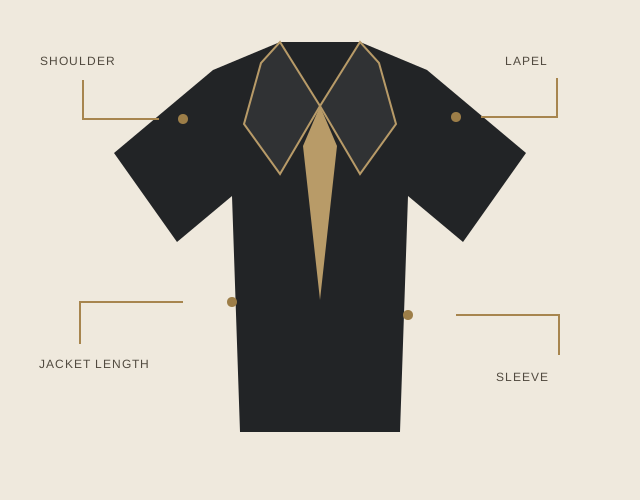
Start with the shoulder
The shoulder seam is a useful first check because substantial shoulder changes are difficult and expensive. The seam should sit close to the natural end of your shoulder, without a divot, ridge, or obvious overhang. The jacket should button without pulling into a sharp X.
Then look at the chest and back. You should be able to move naturally, and the lapels should rest against the chest rather than bow outward. A jacket can be shaped through the waist, but it should not feel tight when you sit or reach forward.
Read the jacket’s proportions
Jacket length, lapel width, button stance, and trouser rise work together. A longer jacket may balance a tall frame; a shorter cut can feel modern, but extreme proportions tend to date quickly. Stand naturally and look at the full silhouette rather than judging a jacket from the collar up.
Check the jacket from the side and back as well as the front. A good fit should look balanced in motion.
Choose cloth for the setting
Worsted wool is a dependable starting point for year-round business and formal use. Fresco and tropical-weight weaves can work in warm weather; flannel and tweed bring texture and warmth. Linen creases readily, which is part of its relaxed character. Decide where and when you will wear the suit before choosing a fabric.
For an adaptable first suit, consider a deep navy or charcoal cloth with a restrained pattern or a solid finish. A tailor can explain how weight, weave, and lining affect comfort.
Know what alterations can solve
- Usually straightforward: trouser hem, waist adjustment within limits, sleeve length, and small jacket-waist changes.
- More difficult: shoulder width, armhole position, jacket length, and major balance corrections.
Ask a tailor what can be altered before buying. A garment that fits well through the shoulders and chest is a better starting point than one that simply has the right label size.