Keep the tie in proportion
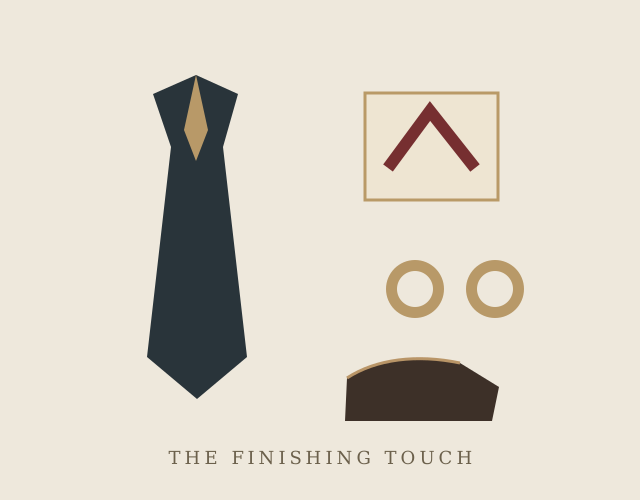
A tie’s width should sit comfortably with the jacket’s lapels and your frame. Solid colors and quiet patterns are easiest to repeat. A simple four-in-hand knot works with many collars; the knot should fill the collar space without looking forced.
When the occasion is formal, let the dress code lead. A bow tie belongs with black tie; a long tie is not a substitute for a tuxedo’s traditional accessories.
Use the pocket square with restraint
A white linen pocket square is a dependable starting point. A simple straight fold works in conservative settings; a softer puff can feel relaxed. The square does not need to match the tie exactly. Pick up a secondary color or texture instead of repeating the whole pattern.
One focal detail is often enough. If the tie is bold, keep the pocket square quieter.
Choose shoes for formality and care
Black cap-toe oxfords are a formal choice; dark brown derbies or loafers can suit less formal settings. Match the shoe to the event, trouser, and belt where appropriate. Clean and condition leather periodically, and use shoe trees to help maintain the shape.
A watch, cufflinks, and other accessories should feel intentional. For evening formalwear, keep them understated and avoid anything bulky beneath a shirt cuff.
Color pairing quick note
Choose a suit color to get a restrained shirt and tie starting point.